


Technology Platforms
Flow Cytometry Immunoassay Platform
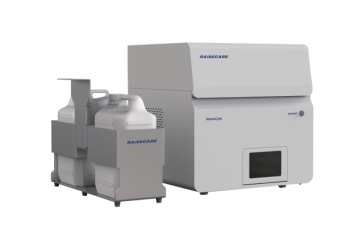
Flow cytometry immunoassay is a core precision detection technology in life sciences and clinical diagnostics. It enables rapid multiparameter quantitative analysis at the single-cell level, and is widely applied in disease diagnosis, immune function evaluation, cell therapy quality control and other scenarios.
Core Technical Principles
RAISECARE Flow Cytometry Platform adopts four core technologies to deliver high-speed, accurate and stable single-cell detection, eliminate errors from traditional testing methods and guarantee reliable test results.
1. Precise Single-Cell Sampling
Based on sheath fluid hydrodynamic focusing and laminar flow effect, sample liquid stream is wrapped to ensure cells pass through the detection zone individually at a uniform speed. Cell overlap and adhesion are completely avoided to secure testing accuracy at the source.
2. Multidimensional Optical Detection
Dual detection of light scatter and fluorescence signals: forward and side scatter light reflects cell size and internal structural complexity; laser excitation of specific fluorescent-conjugated antibodies captures characteristic fluorescent signals of distinct cells to achieve precise cell phenotyping.
3. Specific Immune Recognition
Built on the antigen-antibody specific binding mechanism and equipped with a multi-color fluorescence labeling system, the platform accurately identifies surface markers on various immune cells and lesion cells, enabling simultaneous specific differentiation of multiple indicators and cell subpopulations.
4. Intelligent Digital Analysis
Optical signals are converted into standardized digital data. Integrated intelligent spectral compensation and automatic gating algorithms automatically complete cell clustering, data quantification and result visualization, reducing human-induced errors and improving testing stability.
Separation-Free Extracellular Vesicle (EV) Analysis Platform
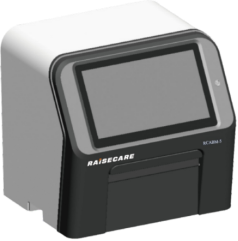
Extracellular vesicles (EVs) have become a hot research topic in oncology in recent years. EVs are nanoscale membrane vesicles actively secreted by cells (30–150 nm in diameter), abundantly present in various body fluids including blood, urine, saliva and cerebrospinal fluid. Rich in biomolecules such as proteins, nucleic acids and lipids, EVs reflect the physiological and pathological status of their parent cells.
Liquid biopsy is a technical system that non-invasively assesses tumor status and guides treatment by detecting tumor-derived biomarkers in blood or other body fluids. Compared with conventional tissue biopsy, liquid biopsy features non-invasiveness, repeatability and dynamic monitoring capability.
Within liquid biopsy systems, EV detection is regarded as one of the most promising testing approaches due to its unique biological properties, with three core advantages:
1. Non-invasive: EVs can be isolated directly from body fluids like blood and urine without invasive sampling procedures;
2. High specificity: Molecular markers carried by EVs accurately represent the characteristics of parent tumor cells;
3. Dynamic monitoring capability: EV secretion levels correlate closely with tumor initiation, progression and therapeutic response, enabling real-time monitoring of tumor development. Therefore, EV-based detection systems stand as the optimal solution for liquid biopsy.
Three Key Pain Points of Traditional EV Testing
1. Cumbersome separation workflows: Complex preprocessing such as ultracentrifugation and density gradient centrifugation takes 4–6 hours;
2. Severe sample loss: Only 30–50% EV recovery rate during separation, with massive loss of small vesicles;
3. Low detection sensitivity: Natural EVs feature low concentration and tiny particle size, making precise quantification difficult via conventional methods.
RAISECARE Technical Breakthrough
Separation-Free Nanoparticle-Enhanced EV Immunoassay Technology
This technology breaks the limitations of traditional detection, realizing three core breakthroughs: no pre-separation, direct sample testing and ultra-high sensitivity, accelerating the clinical translation of EV detection.
Core Technologies
1. Separation-Free Targeted Capture Mechanism
Eliminates complicated preprocessing steps including centrifugation and ultrafiltration. Leveraging inherent EV properties, the system directly enriches EVs from raw samples, shields impurity interference, fully preserves all EV subtypes without sample loss or structural damage.
2. Nanoparticle Signal Amplification Mechanism
High-load nanoprobes deliver tens of thousands-fold signal amplification. Modified with multivalent antibodies on the surface, the probes greatly enhance antigen binding affinity, addressing the challenges of weak native EV signals and small particle size, and significantly boosting detection sensitivity.


 鲁公网安备37021202001169号